Managing Big Feelings Series: This blog is part of the Managing Big Feelings video series, featuring expert insight about hitting, biting, sharing and tantrums from an infant and early childhood mental health specialist, Tiffany Stenson, MC, IMH-E.
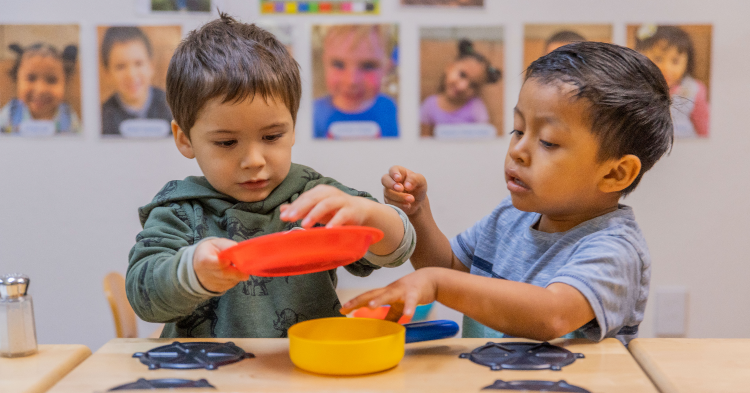
It’s not uncommon for toddlers to refuse to share a toy. A child may grab something, hold onto it tightly or cry when another child wants a turn. If this sounds familiar, you are not alone. First Things First, Arizona’s early childhood agency, has tips to help toddlers share.
Sharing does not come naturally to young children. It is a skill that develops slowly over time. Toddlers are still learning how to handle big feelings, wait their turn and understand the needs of others.
The good news is that everyday moments—even disagreements over toys—help children learn these important social skills.
Why sharing is hard for toddlers
At this stage, toddlers are focused on one thing—their own needs. This stage of development is normal. They may feel a strong need to hold onto a favorite toy because it gives them comfort and control. In early childhood, a child’s brain is still learning empathy and self-control.
Young children may struggle with sharing when they are:
- Still learning about taking turns
- Feeling tired, hungry or overwhelmed
- Excited during play
- Worried about losing something they enjoy
- Not yet able to understand another child’s perspective
Connection helps children share
Children are more likely to share when they feel calm, safe and connected to the adults around them. When a child feels loved and supported, they are more able to handle small disappointments. They can wait for a turn or move on to another activity.
But when children feel tired, disconnected or upset, sharing can feel much harder. Sometimes, when a child insists on a specific toy, what they really need is attention, comfort or connection.
A few minutes of playful connection with a parent or caregiver can often help reset the situation.
What parents can do in the moment
When two children want the same toy, it can be tempting to step in and quickly decide whose turn it is. Instead, try focusing on connection and guidance.
- Stay calm: Acknowledge what your child is feeling. You might say, “You really want that toy,” or “It’s hard to wait.”
- Name their feelings: Helping children name their feelings lets them know they are understood. If another child is using the toy, you can explain, “Sam is playing with it right now. You can have a turn when he’s finished.”
- Help toddlers share: Children learn by watching adults. You can practice turn-taking during simple activities like rolling a ball, stacking blocks or playing a game. Say things like, “My turn… now your turn.” This helps children understand how sharing works.
- Praise positive behavior: When your child waits, shares or plays gently, notice it. For example, “I like how you waited for your turn.” Or, “You shared the toy. That was kind.” Positive feedback helps children repeat the behavior.
- Prepare for playdates: Sharing can be harder in busy or exciting environments. Before playtime with other children, remind your child that everyone will take turns with toys. You might also put away a few special toys that your child is not ready to share yet.
- Stay close during conflicts: Young children often need adult support when disagreements happen. Staying nearby helps you guide them through the situation calmly.
Encouraging empathy
As children grow, they slowly begin to understand how others feel. Parents and caregivers can help build empathy by talking about emotions.
“Your friend is sad because they wanted a turn.”
Simple conversations like this help children begin to think about others. Empathy develops over many small moments of guidance and connection.
“Just like we want the children to learn through empathy, we need to have self-empathy and compassion for ourselves. It not only helps us in the moment, but it teaches and models for that child.”
— Tiffany Stenson, MC, IMH-E, Infant and Early Childhood Mental Health Specialist
Sharing takes time
Learning to share is a gradual process. Toddlers are still developing emotional skills like patience, empathy and self-control. With calm guidance, practice and connection, children slowly learn how to take turns and play with others.
Parents and caregivers do not need to expect perfect sharing overnight. Small everyday moments help children build these important skills over time.