How to nurture your child’s love of reading
A love of reading starts long before a child can read the words on a page.
Early literacy begins with hearing a favorite story for the 47th time. Pointing at a picture and asking, “What’s that?” Turning the pages before you’re finished. Making up a completely different ending.
Those little moments may not look like learning to read yet. But they’re helping your child build language, vocabulary and early literacy skills, and just as importantly, discover that books can be fun.
And here’s the good news: you don’t need a perfect bedtime routine, a giant bookshelf or a degree in early childhood development to teach early literacy skills. A few minutes of reading together can go a long way.
Start with small moments
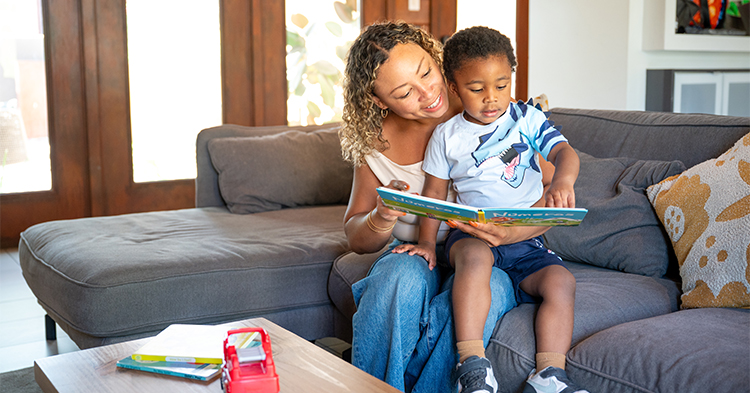
Reading together can happen outside the usual bedtime routine. Your child can look at books in the car instead of using a screen. A relative can share a favorite story during a regular video call. You can read together while your child eats a snack or lunch.
Even a short routine can help your child connect books with comfort, attention and connection. And if you miss a day? No big deal. Pick it back up tomorrow.
The goal isn’t to have a perfect reading streak. What matters most is making reading a regular part of family life.
Make reading interactive
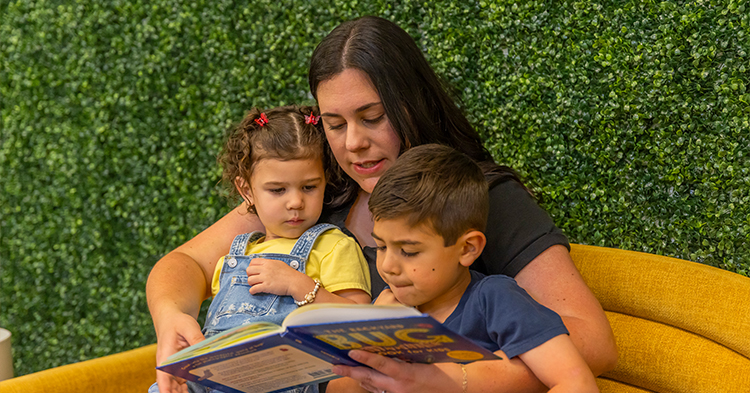
You don’t have to read every word on every page to make storytime count. In fact, some of the best early literacy moments happen when you pause the story and talk about what you’re seeing together.
“Reading is only half the literacy equation. The conversations surrounding a story are just as critical.”
– Elizabeth Henley, Early Literacy Coordinator at the Safford City-Graham County Library in Safford.
Talking before, during and after a story can help children build vocabulary and verbal skills, process what happened, ask questions and begin to predict what might happen next. Children can also start “reading” the pictures by noticing what they see and using those clues to guess what a story may be about.
Try these simple ideas to encourage a love of reading:
- Point to a picture and ask, “What do you see?”
- Ask, “What do you think will happen next?”
- Look at the cover together and ask, “What do you think this story might be about?”
- Connect the story to your child’s life. “That dog is wearing boots! Have you ever worn boots?”
- Let your child turn the pages, even if they skip a few.
- Invite your child to tell the story in their own way.
- Sing songs, make sounds and act out what happens in the book.
- Ask simple questions after reading, such as, “What was your favorite part?” or “How do you think the character felt?”
Your child may not answer every question. They could answer all of them another day. They may suddenly decide the book needs to be upside down. That’s all okay! Your voice, attention and response help build important connections.
Read their favorite books
Again. And again. And again.
Children often want to hear the same story over and over, and that repetition is actually helpful. Each time they hear a family story, they can notice new words, remember what happens next and catch details they missed before.
“When a child wants to read the same story over and over, it may feel redundant to us, but it provides a great brain-building opportunity for them,” Henley says. “Not only does it foster a love of reading, it lets adults discuss the meaning of new words, talk about what children are seeing in the illustrations and reinforce narrative structure, like beginning, middle and end.”
So let your child choose the book, even when you could probably recite it from memory.
You can also keep books within easy reach, such as:
- In the living room.
- Near a favorite chair or nap spot.
- In your child’s room.
- In the car or diaper bag.
- In a basket or on a safe, accessible shelf.
Books don’t have to be expensive or brand new, either. Borrow them from your local library, swap them with friends or family or look for book programs and literacy resources in your community.
Build reading into home life
Reading is only one part of early literacy. Children also learn through talking, singing, playing and listening. You can build these skills into routines you already have—no flash cards required.
Try adding these language-rich moments to your routines:
- Talk about what you’re doing while cooking, getting dressed or cleaning up.
- Name colors, shapes, objects and actions during play.
- Make up a story about what you see outside.
- Sing a favorite song together.
- Ask your child to tell you about their day.
- Talk about what you see while you’re running errands.
And don’t forget: It’s perfectly okay to use your family’s home language.
Talking, reading and singing in the language you know best gives your child rich opportunities to hear, learn and use language. In fact, dual language development can have many benefits.
These moments don’t need to feel like lessons. They’re just conversations, songs and stories woven into everyday life. That’s the magic of it. You can build early literacy anywhere, anytime.
Let reading be joyful
Children are more likely to enjoy books when reading feels like time together, not a test they have to pass.
Follow your child’s interests. Look for books about animals, trucks, music, superheroes, family traditions or whatever happens to be their current obsession.
Your local library is a great place to explore many topics without needing to buy every book. Children’s librarians can recommend books and help families find choices that fit a child’s interests and stage of development.
“If they are excited to check out a picture book, but it has too many words for their developmental age, check it out anyway to support their enthusiasm,” Henley says. “Looking at the pictures together or summarizing the pages yourself are just as valuable because they are sharing the experience with their trusted adult.”
Picture books count, wordless books count and homemade stories count! So does telling the same ridiculous story about a sock-eating monster every night because your child thinks it’s hilarious.
If your child loses interest, try again later. A few happy minutes together are more valuable than forcing them to finish a book. “It is better to have a positive interaction with a portion of the book than to struggle through an entire book,” Henley says. “You can always pick it up where you left off the next day to keep it light and fun.”
The goal isn’t to make your child love every book. It’s to help them discover that books can be a place to laugh, wonder, learn and spend time with someone they love. A place where the world is as they see it.
Find support close to home
First Things First supports early literacy programs and family resources across Arizona.
Family resource centers offer free tools, activities, parenting workshops and connections to local services. Many are located in places families already visit, including schools, churches and libraries.
Learn more about Family Resource Centers.
First Things First is also a founding partner of Read On Arizona, the state’s early literacy initiative. Read On Arizona’s Smart Talk resources encourage families to have back-and-forth conversations with young children, even before children can use the words.
Explore early literacy resources from First Things First.