
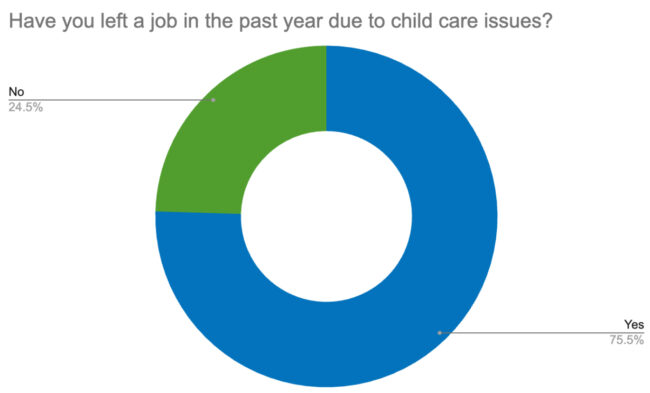
Child care challenges continue to affect Arizona working families. A recent survey of Arizona’s working parents found that 3 out of 4 of them left a job in the past year due to child care issues.
To better understand the impact of child care challenges on Arizona working parents, First Things First (FTF), Arizona’s early childhood agency, surveyed more than 800 working parents across the state last fall. They shared their insights about the experiences they face in securing and maintaining child care.
Maricopa parent Ashley Buckman said she and her husband looked at her salary, their child care costs and the family’s expenses before deciding to stay home with her son and stepdaughter.
“After running the numbers over and over again, the cost of child care ended up being so high that it was canceling out my income,” said Buckman, who had a career in corrections. “It wasn’t because I didn’t want to work. It wasn’t because I lacked ambition. It’s because the system made it nearly impossible to do both.”
Working parents in all 15 counties across Arizona responded to the survey, providing a statewide perspective from both urban and rural communities. One common theme emerged across the state: access to affordable, reliable child care remains a significant concern for working parents.
“For many parents, child care is not optional,” said Joe Barba, First Things First senior director of government affairs. “Child care allows parents to participate and remain in the workforce.”
Barba regularly works with state policymakers to highlight the importance of early childhood education and its impact on the economy.
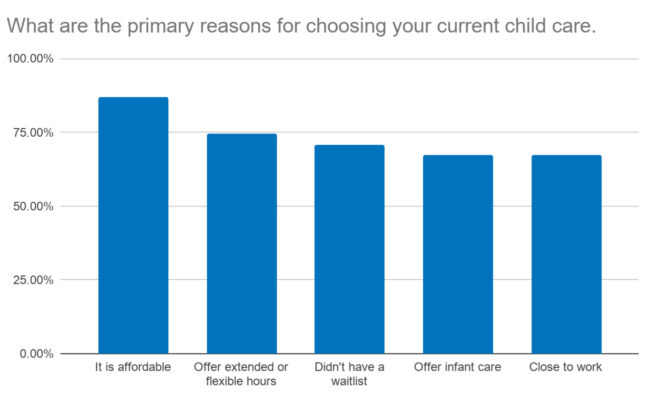
Working parents shared that affordability is a leading factor in their child care decisions, outweighing other factors such as location or flexible work hours. In fact, nearly 90% of working parents surveyed said affordability was the primary reason they chose their current child care arrangement.
Child care challenges extend far beyond day-to-day scheduling. The lack of affordable and reliable care can directly impact long-term career goals, continued education and financial stability.
More than 42% of surveyed parents said they postponed schooling, continuing education or workforce training opportunities in the past year because of child care issues.
That was the case for Phoenix mother, Katie Gorin.
“Going to graduate school and having children have always been in my future, but having children happened to happen first,” Gorin said. “I chose to stay in my profession part-time to stay active in my career, be present in my baby’s developmental years and avoid paying for the high cost of child care. It wasn’t until my children were in school that I was able to pursue my master’s degree.“
Balancing work and family responsibilities can be a challenge, forcing some parents to sacrifice career opportunities or time with their families. For those managing both, the constant juggling can often lead to burnout and financial strain.
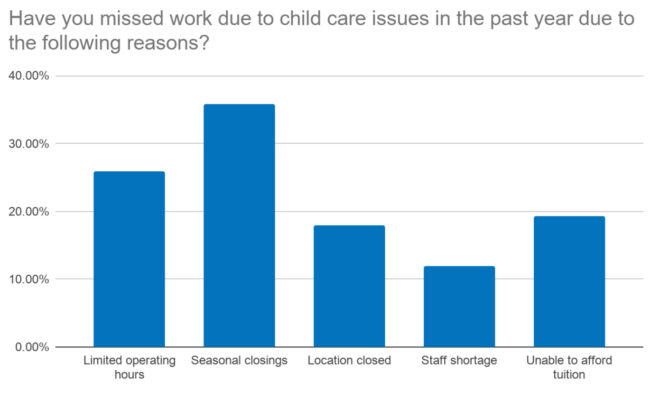
More than 50% of working parents reported missing work in the past year due to child care-related issues, including provider closures, illnesses or the inability to secure backup care. These disruptions can make it difficult for working parents to maintain reliable schedules and can ultimately impact workplace productivity, attendance and retention.
The survey findings reinforce that child care is not only a family issue, but also a workforce and economic issue impacting communities across Arizona. According to childcaregap.org, Arizona could face an estimated $3.8 billion economic loss over the next 10 years due to ongoing child care challenges. Those losses reflect reduced earnings for parents forced to cut work hours or leave the workforce. They also include decreased business productivity due to absenteeism and turnover, along with declines in tax revenue from household and business income.
As Arizona’s workforce continues to grow, First Things First continues to raise awareness about the importance of accessible, affordable and reliable child care for families, businesses and Arizona’s economy.
“When parents are unable to access affordable and reliable child care, the impact goes far beyond the family,” Barba said. “Businesses may experience increased turnover, staffing shortages and reduced productivity as working parents struggle to balance job responsibilities with unreliable child care arrangements.”