
When we talk about infant mental health, we’re talking about how babies learn to trust, feel safe, express emotions, explore their environment and build relationships. It includes their early social and emotional development—the way they form secure attachments with you and other caregivers.
Early experiences with your baby shape how they learn, handle emotions and connect with others as they grow. Whether we feel it in the moment or not, those everyday moments with them make a huge difference.
Everyday ways to support your baby’s emotional development
Respond to your baby’s cues.
As a parent, you quickly learn your baby’s unique, nonverbal language cues. Those cues are their signal to you that they need something, and when you comfort, smile at or help your baby calm down, you teach them that the world is safe and their feelings matter.
Help your baby feel safe and secure.
Ensuring your baby feels secure enough to explore the world and safe when frightened or uncomfortable is essential to their growth and development.
Talk, sing and play.
Your voice and interactions help build connections that support healthy brain development. Even simple back-and-forth conversations strengthen bonding.
Create routines.
Predictable routines, like bedtime or feeding, help babies feel secure and understand what comes next.
Take care of yourself.
Your well-being matters, and managing stress can be tricky for any parent. A supported parent or caregiver can better support a child’s needs. Hear from expert Tiffany Stenson on how to give yourself grace when things are overwhelming, and more.
Common questions
Is my baby is developing healthy emotional bonds?
Babies show healthy emotional bonding, which is often called secure attachment, through simple, everyday interactions. You may notice baby:
- Looking for you or turning towards your voice
- Calming down when you comfort them
- Smiling when you interact with them
- Making eye contact during feeding or play
- Showing excitement when reunited after a brief separation
- Exploring their surroundings comfortably while frequently checking back that you are still there
These signs mean your little one feels safe and connected. Your baby comes to you for comfort when being scared or hurt as a safe haven. Your baby looks back to make sure you are still there and shares excitement with you as a secure base when exploring the surroundings. These reciprocal interactions help your baby form a secure attachment. But, being a parent doesn’t require perfection—just consistent, loving care and responding to your baby’s cues as best as you can.
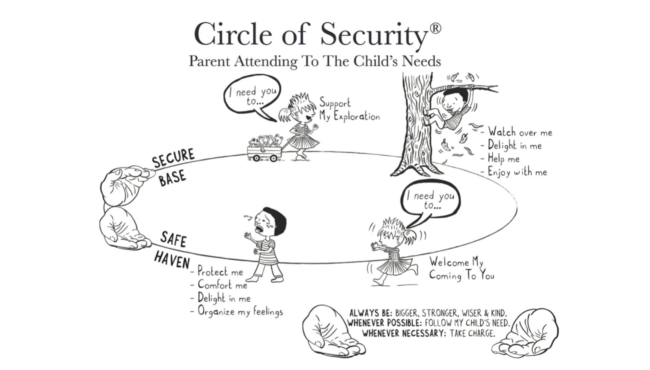
“When a young child knows they can count on a caring adult to welcome them back, comfort them and delight in who they are, that sense of safety becomes the foundation for everything else. Secure attachment isn’t about being a perfect parent. It’s about being a consistent, safe space when children need reassurance and a secure base when they’re ready to explore.
Research shows these early relationships quite literally shape how children manage stress, build confidence and form healthy relationships for the rest of their lives.”
– Kyoko Tavassoli, First Things First programs & evaluation specialist
When should I reach out for help?
If you’re concerned about your baby’s development, emotions or bonding, trust your instincts and talk with your pediatrician or a child development specialist. There are other resources available, too:
- Birth to Five Helpline: Offers free, confidential support from early childhood experts to help parents and caregivers navigate the challenges of raising young children.
- Ages & Stages: Learn about your baby’s developmental milestones and what to do if you’re concerned
- Zero to Three: Information on early social-emotional development and parent resources
- Arizona Early Intervention Program (AzEIP): Provides support and services for infants and toddlers with developmental concerns.
When babies feel safe, loved and understood, they build confidence and emotional well-being they’ll carry throughout life. The small, everyday moments you share truly matter, and you’re already helping your baby grow in the best possible way.