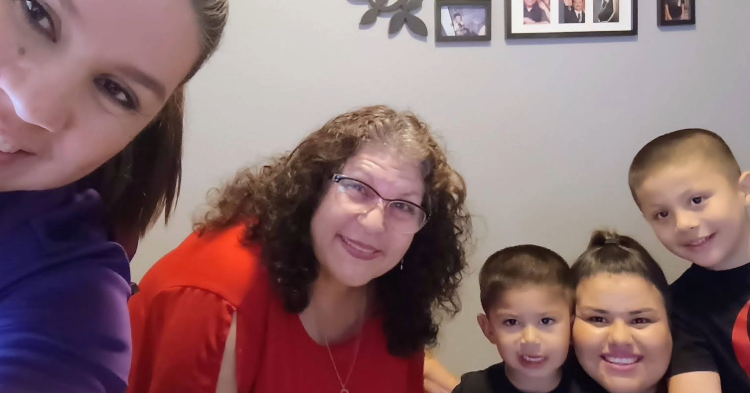
Kayla Francisco of Youngtown has been visiting the Peoria Family Resource Center for a few years. She started when her older child was a toddler and her twin boys were around 18 months old.
Francisco loves that the family resource center has helped her build a community among moms.
“We get to share our personal experiences on the different stages that we are in with our kids and we get to pass on information to each other,” she said.
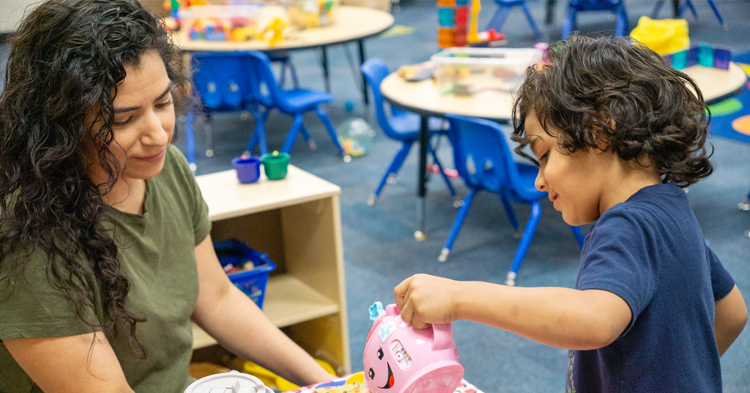
Located at schools, churches, libraries or other community buildings, these centers, also known as FRCs, provide parents and caregivers of children from birth to age 5 with various tools and resources to help them create a stable, nurturing environment for young children. The centers also support families by providing resources and referrals, information and education, activities focused on early childhood development and opportunities for social connections.
“In our community, a family resource center is really a gathering place,” said Cory Underhill, the family resource center coordinator for the Peoria Unified School District. It is one of dozens of family resource centers that First Things First funds throughout Maricopa County.
“Our goal is to help families connect to each other and to us and to other resources that they might need in the community. We really want to normalize that asking for help or needing connection as a parent is a very normal and natural thing.”
One of the FRC benefits that had the greatest impact on Francisco and her children was a developmental milestones class. At the time, one of her twins wasn’t speaking and the other one was banging his head against objects.
The class brought in someone from the Arizona Early Intervention Program to talk about the types of services for children birth through age 2.
“You met with someone who would come and tell you whether your kid could
qualify for service, or if it is a developmental concern. And with my twins, one of them wasn’t speaking yet. I explained to her what was happening and she said, ‘I cannot guarantee that your kids will receive services. However, I will make the proper arrangements for them to have a meeting and get evaluated to see if they do qualify.’
“It was amazing because they were able to qualify for about 6 months to receive speech therapy and occupational therapy,” Francisco said. “I learned so much from the occupational therapist and the speech therapist. One thing that I learned from the speech therapist was that my boys had oral restrictions. They had lip ties and tongue ties.”
Lip and tongue ties occur when the restrictive bands of tissue that connect the lips to the gums or the tongue to the floor of the mouth are unusually tight, short or thick. This restricts normal mobility and frequently causes difficulty latching during breastfeeding, speech impediments and dental issues.
“So once I got that released, my boys were talking,” Francisco said. “It was like a domino effect. They opened the door for me to ask more questions like, ‘Why isn’t my kid where he’s supposed to be? Or why is my son headbanging?’ I’ve learned so much as a mom through this program and the services. And now that my kids have outgrown it, they are continuing their journey through therapy. But had it not been for the resource center offering that class in the first place, I don’t know where I would be.”